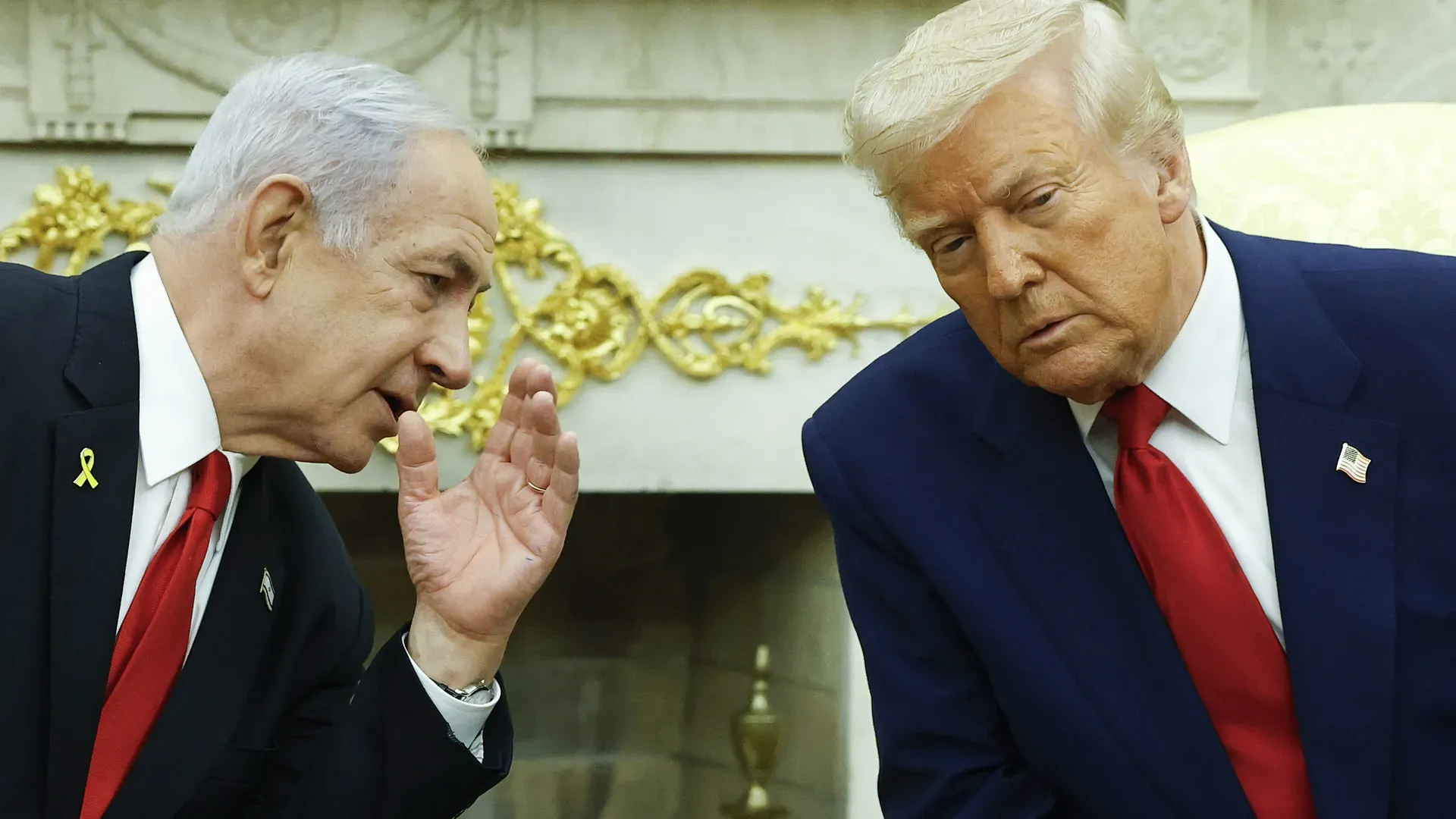
Israeli Prime Minister Benjamin Netanyahu announced on Sunday that Israel rejects the 15-point roadmap drawn up by the US-led Board of Peace to move Gaza into the second phase of President Donald Trump's plan, and that its forces will not withdraw from the Strip until Hamas is fully disarmed.
"Israel rejects the 15-point document," Netanyahu said at a cabinet meeting, referring to the roadmap Palestinian factions accepted late last month. He added that the occupation army would not carry out any withdrawal until Hamas is genuinely disarmed and would continue what he called thwarting threats against its forces and citizens, language that formalizes the continuation of Israel's near-daily attacks and assassinations in Gaza in violation of the ceasefire reached last October.
The rejection marks a rare and open break with Trump, who has repeatedly promoted the plan as a signature foreign-policy achievement. It came a week after the Board of Peace, following a meeting between its director-general Nickolay Mladenov and Netanyahu, stated that no Israeli withdrawal from Gaza would take place until the disarmament of Hamas was complete, a position that already tracked closely with Israel's demands. Finance Minister Bezalel Smotrich reinforced the refusal, declaring that the occupation army could not withdraw even a single millimeter from Gaza.
The 15-point roadmap Israel rejected sets out a gradual, time-limited, and internationally supervised process. It requires Israel to complete without delay all its outstanding obligations under the October ceasefire, above all a full halt to its military operations, while heavy weapons in Gaza are placed into storage under the supervision of the National Committee for the Administration of Gaza, the Palestinian technocratic body meant to govern the Strip, in parallel with a phased Israeli withdrawal and the deployment of an international stabilization force. The document explicitly commits to the principle that no one will be forced to leave Gaza.
Netanyahu's refusal did not come out of nowhere. For weeks, his domestic opponents had argued that he would find it nearly impossible to say no to Trump in this window, with an Israeli election approaching and with Israel entangled in parallel files on Iran and Lebanon that make an open confrontation with Washington costly. That reading now looks incomplete. Netanyahu has said no anyway, and the question is why.
The rejection is inseparable from Netanyahu's political survival. He faces a difficult election campaign despite having promised total victory over a Hamas that still governs parts of Gaza, and only a few months before the vote he has little incentive to be seen granting concessions. His right-wing coalition is trailing in the polls, and his senior partners have made clear they want to expand Israel's occupation of Gaza rather than relinquish any of it. The looming October election, dominated by the war in Gaza and the confrontation with Iran, has turned every move Netanyahu makes into a calculation about holding his coalition together and staying in power.
That points to the first reading: the rejection as an election move. Facing polls that suggest his bloc could lose, and a far-right flank led by Itamar Ben-Gvir and Smotrich threatening to collapse the coalition if he accepts any deal that leaves Hamas standing, Netanyahu has strong incentive to posture as the leader who refused to withdraw and refused to compromise on what he casts as total victory. On this reading, the defiance is aimed less at Washington than at Israeli voters, a bid to consolidate the right behind him before the ballot.
But there is a second reading that fits the same facts, and it is harder to dismiss. Netanyahu's political fortunes and his legal fortunes have long been bound together. His governing coalition has been the shield protecting him through his corruption trial and now through the fallout of October 7, and an election he loses threatens both. Continuing the war, and with it the state of emergency and the far-right partnership that sustains his majority, is one way to postpone or reshape that reckoning. On this reading, rejecting the deal is not a maneuver to win the coming election so much as a way to keep the machinery of the war running, deferring the political accounting an end to the genocide would bring.
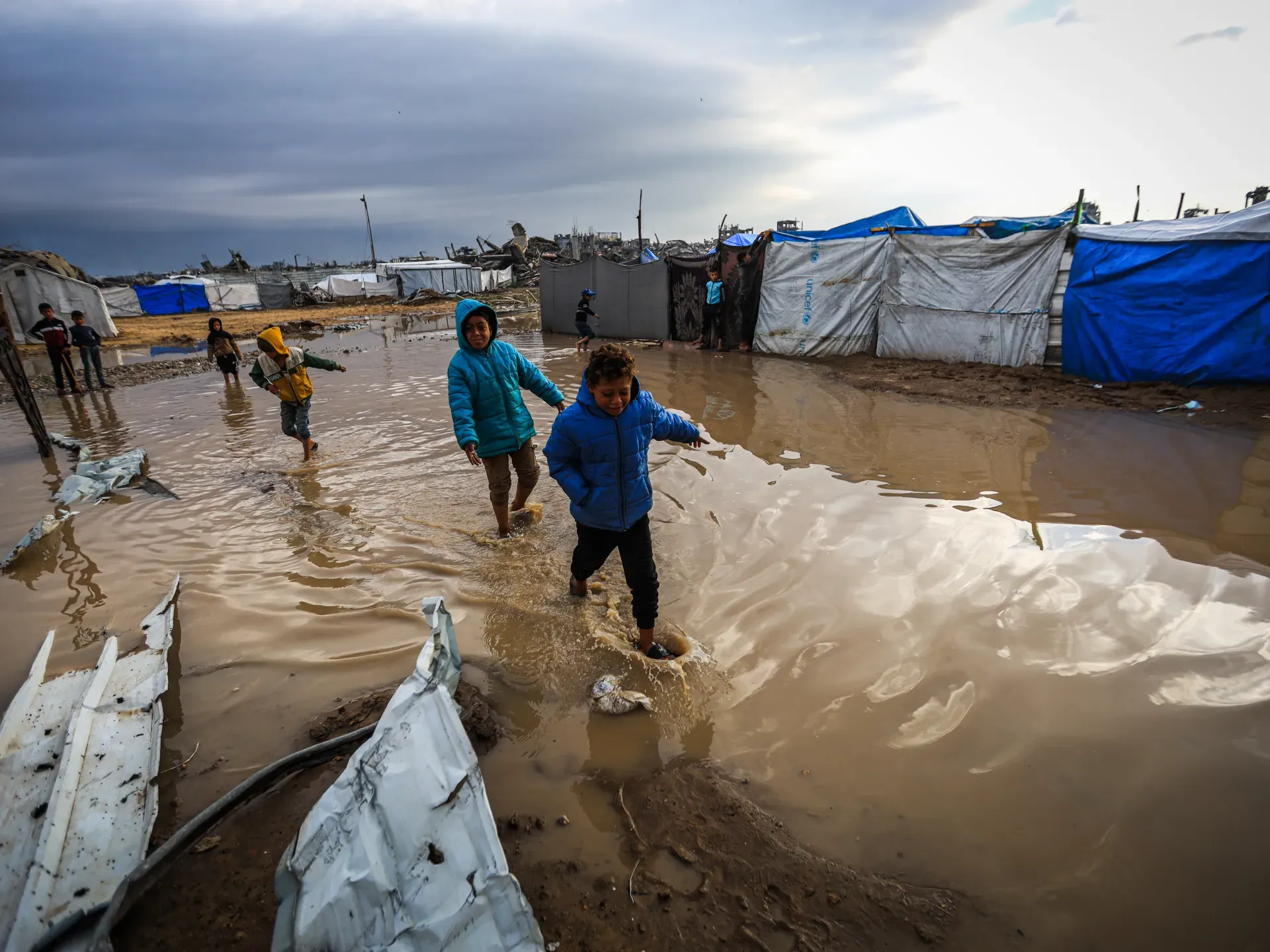
The two readings are not mutually exclusive, and the distinction between them matters mainly at the margins. Whether the rejection is calculated to win an election or to avoid the consequences of one, its immediate effect on the ground is identical. It keeps Israel's forces inside Gaza, keeps its attacks and assassinations going, and keeps the roadmap that Palestinian factions accepted from taking hold. What is presented in Israel as a debate over Netanyahu's political timing is, for Palestinians in Gaza, the difference between the killing stopping and the killing continuing.
There is also a revealing contrast in what Israel has and has not accepted. Last October, Netanyahu embraced Trump's original 20-point framework, announced immediately after a meeting between the two, which promised a ceasefire, the release of captives, the entry of aid, and a pledge that Israel would neither reoccupy nor annex Gaza. That framework deferred the hardest questions, above all Hamas's role and the sequencing of any withdrawal, to a later stage. Now that the later stage has arrived in the form of a concrete, supervised roadmap requiring Israel to actually halt its operations and begin pulling back, Israel has refused.