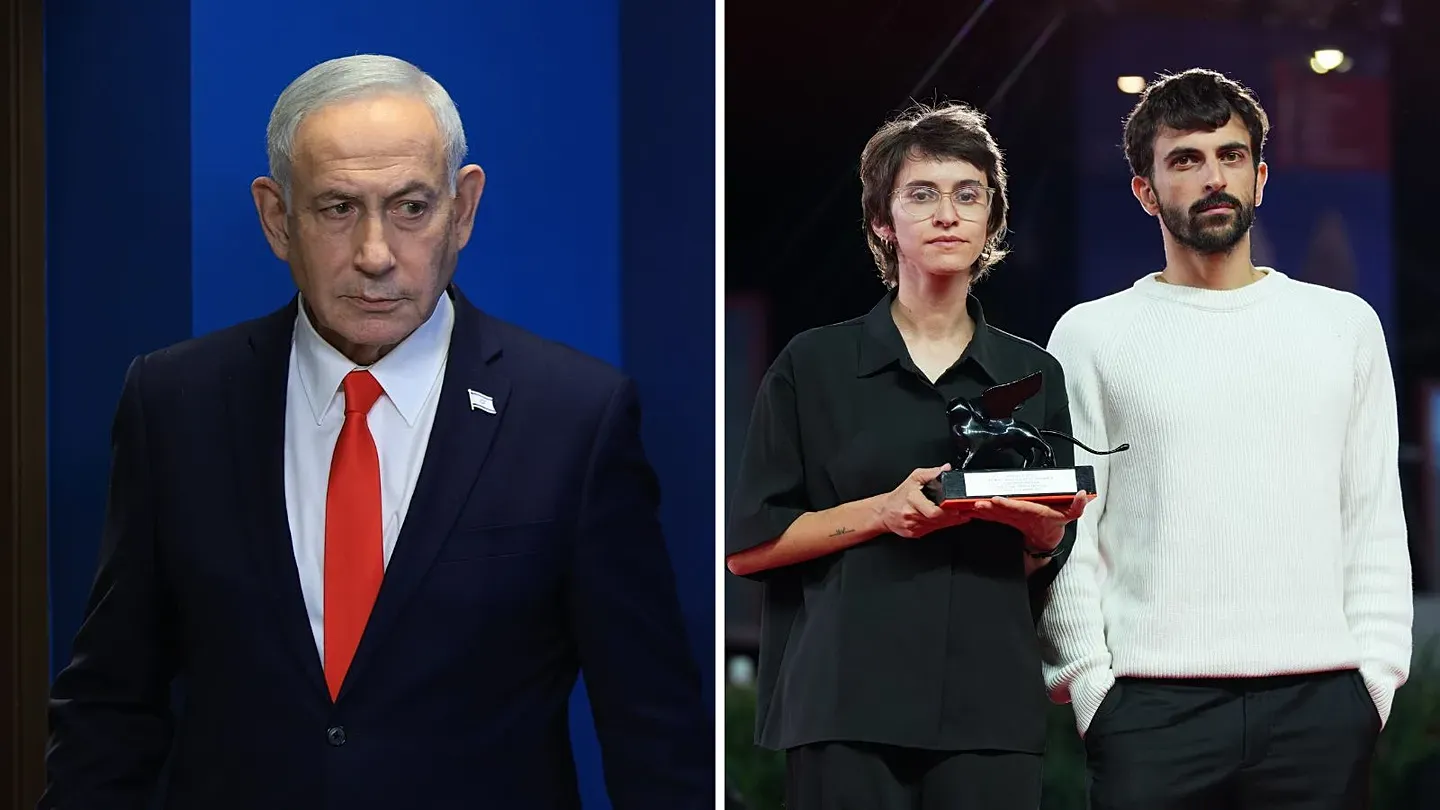

Israel, which presents itself to the world as the only democracy in the Middle East, has responded to a Venice Film Festival prize-winning documentary about its killing of Palestinian civilians in Gaza by threatening to strip the filmmakers' citizenship, brand them traitors, and have them deported.
Culture Minister Miki Zohar announced he would "act immediately to revoke the Israeli citizenship" of Yuval Abraham and Rachel Szor, the Oscar-winning directors of NAZA, which won the Venice Film Festival's Special Jury Prize a day before his outburst. Zohar called the film "vile" and its Venice award "shocking," declaring that the directors were guilty of "self-loathing" and had committed "a betrayal of the state" by making a film that exposed the genocide to the world. "You are a disgrace and an embarrassment to the entire people of Israel. Go away!" added far-right National Security Minister Itamar Ben-Gvir on social media, suggesting the directors would be "welcomed with open arms" by Hamas.
Zohar also said he had "led an important reform in cinema" precisely to ensure that Israeli public funds would no longer be used for films he considered harmful to the army or the state, a move that amounts to turning state cultural funding into a political loyalty test.
The law, however, does not actually allow what Zohar is threatening. Israeli legal experts confirmed that current legislation provides no basis to revoke the citizenship of Israeli Jews for making a film, and that the minister's announcement has no legal foundation. That did not prevent him from making it, or from framing the documentary as sufficient grounds for the directors to be expelled.
NAZA is built on the testimony of 24 Israeli intelligence officers and soldiers who describe, in their own words, how the Israeli military uses AI and surveillance to identify and bomb Palestinians in their homes, knowing that families are inside. The film was shot in secret on Tel Aviv rooftops over three years. It breaks the record of documentary NAZA's predecessor, The Voice of Hind Rajab, which had earned a 22-minute standing ovation at Venice the year before, getting a 25-minute standing ovation at its premiere, the longest in the history of the festival.
To that record-breaking reception, and to the substance of what the film documents, the Israeli occupation army had a ready response. Its spokesman said, commenting on the promotional material for NAZA: "The allegations presented in the promotional announcement are untrue. The IDF is a moral army, operating according to international law, and under binding professional values and standards."
The army that Abraham and Szor's film accuses of using AI to designate two million Palestinians as targets, of bombing families in their homes, and of engineering the conditions for mass civilian death in Gaza describes itself as moral, lawful, and professional. The directors say they have 24 of its own soldiers on record saying the opposite.
The episode captures the contradiction at the heart of the "only democracy" claim. A state that holds free elections while occupying another people, censors the arts that expose that occupation, threatens to strip citizenship from those who document its crimes, and then insists through an army spokesman that its soldiers operate according to the highest moral standards is not a democracy in any meaningful sense of the word.