Occupied Palestine (QNN) - The Lebanese government signed a framework agreement with Israel on Friday that for the first time in Lebanese history provides legal legitimacy to Israeli occupation of southern Lebanon, conditioning Israeli withdrawal only on Hezbollah disarmament across the entire country. Within less than 24 hours of the agreement's signing, Israel launched multiple attacks across southern Lebanon, effectively violating the ceasefire announced less than a week earlier.
The framework agreement was signed despite the fact that the Iran-US memorandum of understanding explicitly includes Lebanon ceasefire terms and mandates complete Israeli withdrawal from southern Lebanon. By signing a separate bilateral agreement with Israel instead of adhering to the Iran-US MOU, Lebanon's government abandoned the position of its primary ally in the region and legitimized Israeli conditions that Iran had explicitly rejected in its negotiations with the United States.
Hezbollah Secretary-General Naim Qassem rejected the agreement entirely, stating that the framework accord is "humiliating, shameful, and a surrender of sovereignty." Qassem said the agreement should be replaced by the Iran-US memorandum of understanding, which does not condition Israeli withdrawal on Hezbollah disarmament.
Qassem accused Lebanon's government of legitimizing Israeli occupation "for many years to come," stating: "This could even lead to the annexation of these lands to the Zionist entity." He called on Lebanese authorities to retract what he described as "sins that are destroying Lebanon."
Regarding the provision tying Israeli withdrawal to Hezbollah disarmament, Qassem stated: "Linking the Israeli withdrawal to the disarmament of the resistance throughout Lebanon is a very dangerous proposition that crosses all red lines." Hezbollah declared it will continue armed struggle and will not abandon resistance in the field.
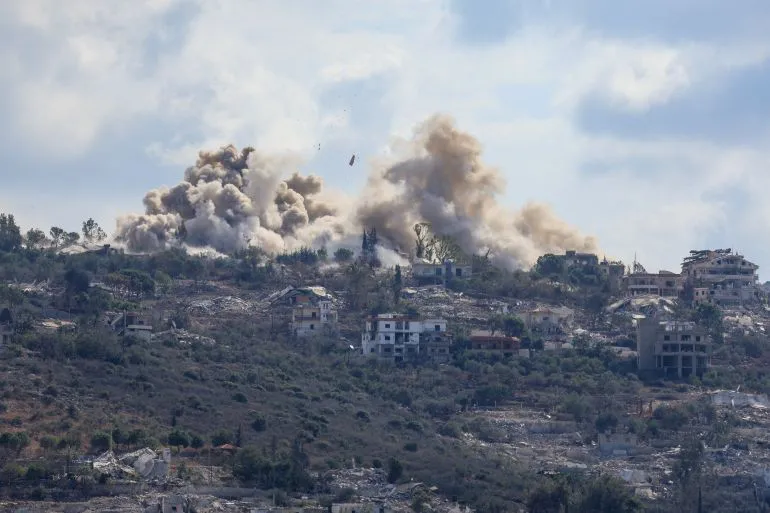
Within hours of the agreement's signing, Israeli warplanes and drones conducted multiple strikes across southern Lebanon. According to Lebanese sources, warplane strikes targeted Nabatieh al-Fawqa, with drone strikes reported at an intersection with an amusement park in the same area. In the Hasbaiyya district to the east, Israeli forces pushed further north supported by machine-gun fire.

According to Lebanese sources, warplane strikes targeted Nabatieh al-Fawqa, with drone strikes reported at an intersection with an amusement park in the same area. In the Hasbaiyya district to the east, Israeli forces pushed further north supported by machine-gun fire.
According to Lebanese sources, the strikes on Nabatieh al-Fawqa resulted in one killed and two wounded.

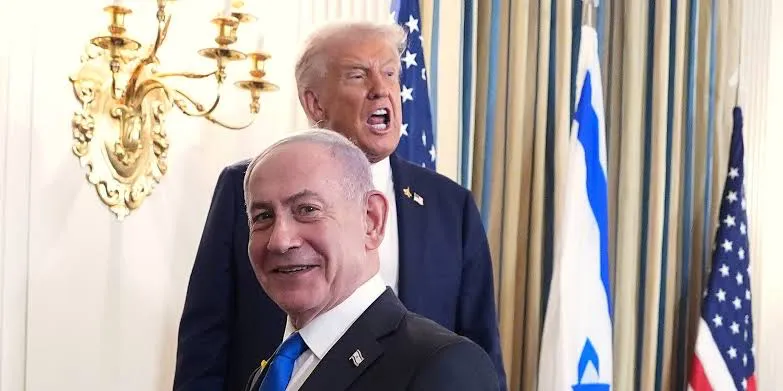
Israeli Defence Minister Israel Katz immediately clarified the agreement's true terms, stating that the accord grants Israel the right to remain in Lebanese territory as long as weapons are not removed, after Iran had attempted to impose Israeli withdrawal through pressure on the United States. Katz called the agreement a historic achievement and important political and security accomplishment for Israel.
Katz emphasized that Israel will remain in its security zone in southern Lebanon and will not withdraw until Hezbollah is disarmed across all of Lebanon. In doing so, Katz confirmed what Hezbollah and Iran had warned: that the framework agreement legitimizes indefinite Israeli occupation conditioned only on Palestinian and Lebanese disarmament.
Netanyahu had previously framed the limited withdrawal from two areas as a "major achievement" while maintaining Israeli occupation of the broader security zone. With Katz's clarification, it became apparent that the agreement fundamentally shifts Lebanese sovereignty and territorial integrity away from Lebanese control and toward Israeli conditions.
The pattern is unmistakable. The Lebanese government negotiated and signed an agreement under pressure that violates the Iran-US memorandum of understanding which Iran had won through months of negotiations. Within hours of signing, Israel demonstrated that the ceasefire carries no weight and that the agreement simply provides legal cover for continued Israeli occupation and military operations.
The agreement's true objective may extend beyond securing a weakened government. Within hours of the announcement, hundreds of Lebanese flooded the streets in rejection of the accord, with opposition transcending sectarian lines. Israeli officials have long publicly expressed desire for civil war in Lebanon as a means to fracture resistance and facilitate expanded occupation. The framework agreement, by imposing an illegitimate accord that contradicts the Iran-US MOU and legitimizes indefinite Israeli occupation, creates exactly those conditions.
By deepening divisions between those who accepted the agreement and those who reject it, Israel achieves what military force alone cannot: Lebanon's internal collapse and the disintegration of unified resistance to occupation.