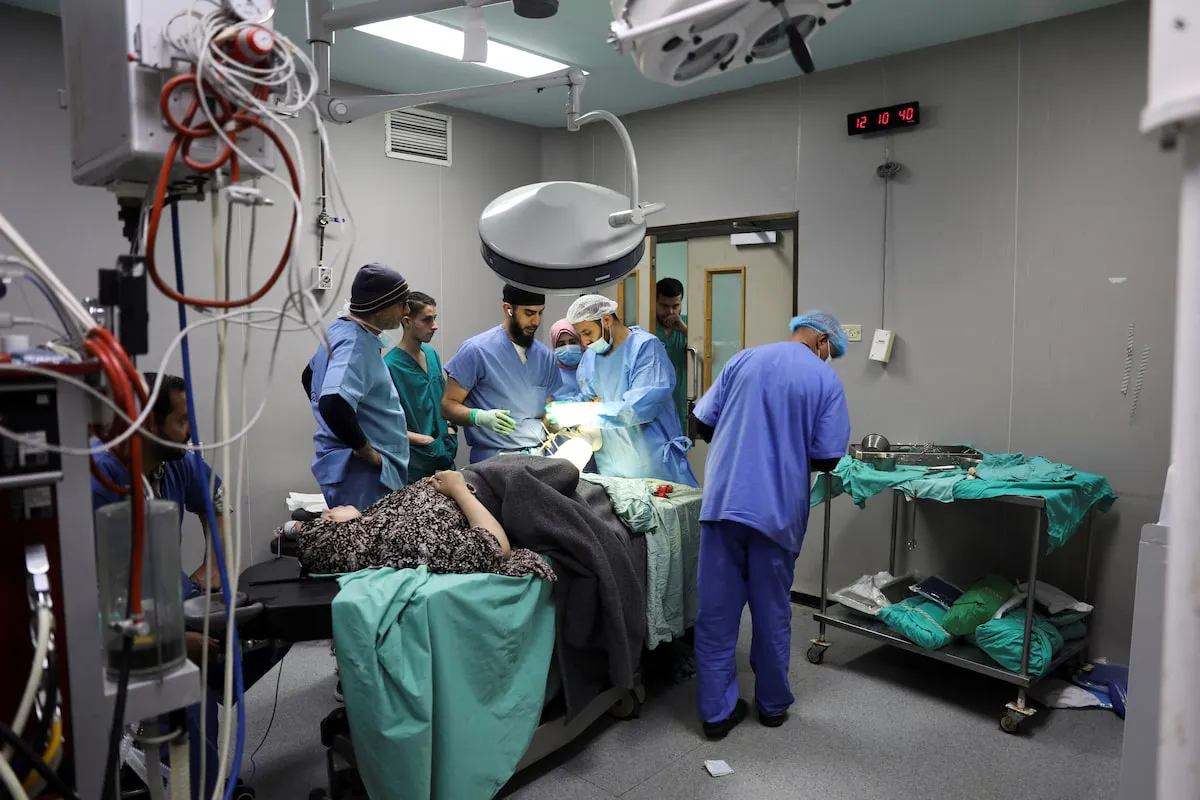
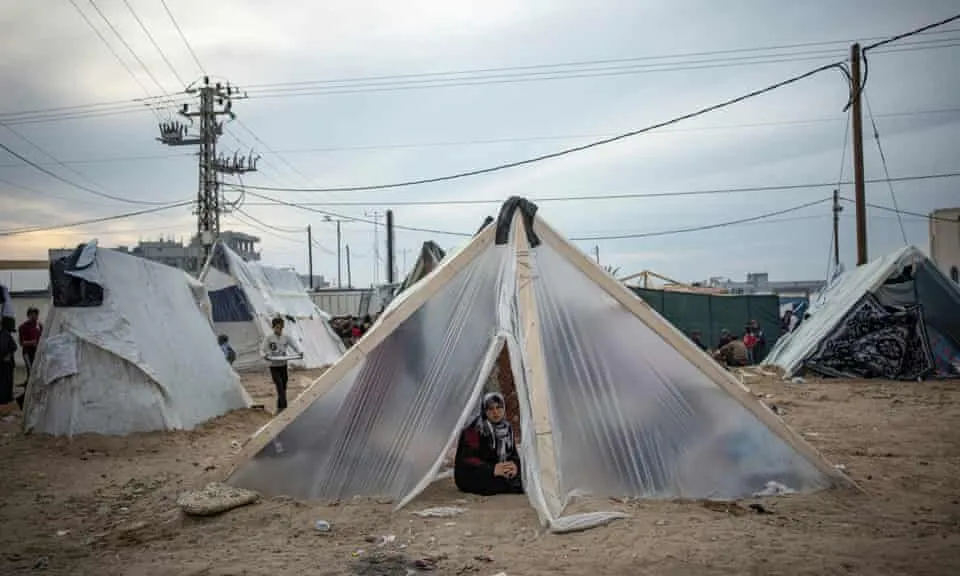
Gaza (QNN)- More than 2.15 million displaced Palestinians are living in desperate conditions across Gaza, with more than 867,000 sheltering in makeshift tents that are no longer fit for purpose, the Gaza Government Media Office said Monday, as Israeli continues to attack the enclave and restrict the entry of aid, violating the so-called ceasefire.
The office warned of a looming humanitarian catastrophe with winter approaching, noting that more than half a million children are among those living in tents. It called on the international community to pressure Israeli authorities to allow the immediate entry of cranes, weather-resistant tents, insulation materials, and other shelter supplies into the besieged enclave.
“The situation is beyond critical,” the statement said, urging the removal of rubble, rehabilitation of infrastructure, and protection for the most vulnerable populations.
The appeal comes as aid agencies have repeatedly warned that Gaza’s population faces severe shortages of food, water, and medical care amid ongoing Israeli attacks.
According to previous data from the Media Office, the Israeli forces destroyed 90 percent of civilian infrastructure in the Strip during its genocide war that began on October 8, 2023, with reconstruction costs estimated by the UN at approximately $70bn.
According to the Norwegian Refugee Council (NRC) in June, 5,000 households sleep outdoors, while 52,000 households live in overcrowded shelters. 850,000 people still lack emergency shelter items such as plastic sheeting, plywood, and rope. “These figures point to a shelter crisis driven not by weather, but by destruction, displacement, and blocked relief,” it said.
Summer heat has only sharpened the risks families face, with daytime temperatures reaching 34.5C in the warmest month and the number of hot days with temperature recording 35C or higher expected to increase.”
“Gaza’s families are not facing a natural disaster. They are being forced to endure deadly heat in emergency shelters that were never designed to withstand prolonged displacement or high temperatures. Simple measures such as shading, ventilation and basic shelter improvements can significantly reduce risks and improve living conditions, but this is currently not available inside of Gaza and deliberately not being allowed to enter,” said Jehan Salim, Shelter Cluster Coordinator.
Without these supplies, the NRC said, preventable “risks will deepen. Children, older people and those with chronic illnesses face higher risks of heat stress, dehydration, respiratory distress, and disease. Women and girls face greater danger in overcrowded sites where poor lighting, lack of privacy and unsafe sanitation deepen fear and exposure. “
“It is an outrage that families in Gaza, after months of displacement and loss, now face summer heat in makeshift tents because Israel continues to restrict shelter materials,” said Jan Egeland, Norwegian Refugee Council (NRC) Secretary General.
“The Shelter Cluster and its partners have the expertise and capacity to help Palestinians secure safer and more dignified shelter. But skills cannot replace materials. Israel must allow shelter supplies into Gaza now so our partners can help families protect themselves from heat, exposure and further harm.”
Israel’s genocide have destroyed and damaged 76.6 per cent of Gaza’s housing stock, displaced families again and again, and left families with no safe place to go. Families need proper tents and basic shelter materials, including tarpaulins, shade nets, plastic sheeting and basic repair supplies.
“This summer does not have to strip away more lives and dignity,” said Salim. “The solutions are known, the response capacity exists, and partners are ready to act. What is needed now is sustained entry of shelter materials to help families protect themselves from heat, exposure and further harm.”
Last Winter, more than 127,000 tents housing displaced families were destroyed or swept away by flooding and powerful winds, affecting over 250,000 people across Gaza, the Gaza Civil Defense said.
Humanitarian groups have repeatedly urged Israel to allow unimpeded deliveries of aid to Gaza.
Despite the ceasefire which took effect in October 2025, Israel has continued to kill Palestinians in Gaza and restricted the entry of much-needed aid, violating the agreement.
“Entry of distribution and aid in the Gaza Strip will proceed without interference from the two parties through the United Nations and its agencies, and the Red Crescent, in addition to other international institutions not associated in any manner with either party,” Trump’s “20-point peace plan” says.
More than 100 aid groups accused Israel of obstructing life-saving aid from entering Gaza and called on it to end its “weaponisation of aid”.
Israel has also restricted the entry of essential humanitarian aid to the enclave despite the ceasefire stipulating that “full aid will be immediately sent into the Gaza Strip”.
600 trucks are supposed to enter the enclave daily, including 50 fuel trucks.
The Gaza Government Media Office noted that Israel continues to block the entry of tents, mobile homes, caravans, and other essential shelter materials, “in clear violation of existing agreements and international humanitarian law.”
Ismail Ibrahim al-Thawabta, director general of the Gaza Government Media Office, said the Gaza Strip “faces indicators of a worsening humanitarian crisis if restrictions on aid continue. Responsibility for preventing this crisis lies with the occupying power, which is limiting humanitarian supplies in clear violation of international humanitarian law and its obligations towards the civilian population.”
Also, the Israeli occupation government said it banned 37 aid groups from war-torn Gaza, the occupied West Bank and occupied East Jerusalem; the decision took effect on March 1, a move described as having potentially devastating consequences for Palestinians.
The vast majority of Gaza’s more than 2 million residents rely on aid groups for food, water, healthcare, shelter and other essentials.
Human Rights Watch stated in a February report that Israeli restrictions on aid had continued to cause shortages of medicines, reconstruction equipment, food, and water inside the strip.
At least 1,260 Palestinians have been killed in Israeli attacks across the Gaza Strip since the US-backed ceasefire came into effect.
The The Ministry of Health said the overall death toll from Israel’s war on Gaza has also surpassed 73,400.
Apartment buildings, markets, vehicles, and cafés have continued to come under attack. In some cases, families received displacement orders only minutes before their homes were bombed, while many others received no warning at all.
United Nations human rights chief Volker Turk condemned Israel’s attacks in the Gaza Strip, saying that “the unrelenting pattern of killings” reflects Israel’s “sweeping impunity”.
“Palestinians are still being killed and injured in what is left of their homes, shelters and tents of displaced families, on the streets, in vehicles, at a medical facility and a classroom,” Turk said.
“We mourn as Gaza reaches yet another tragic milestone … Thousands more people who were told the worst was over are still burying their loved ones,” said Fikr Shalltoot, Gaza director at Medical Aid for Palestinians.