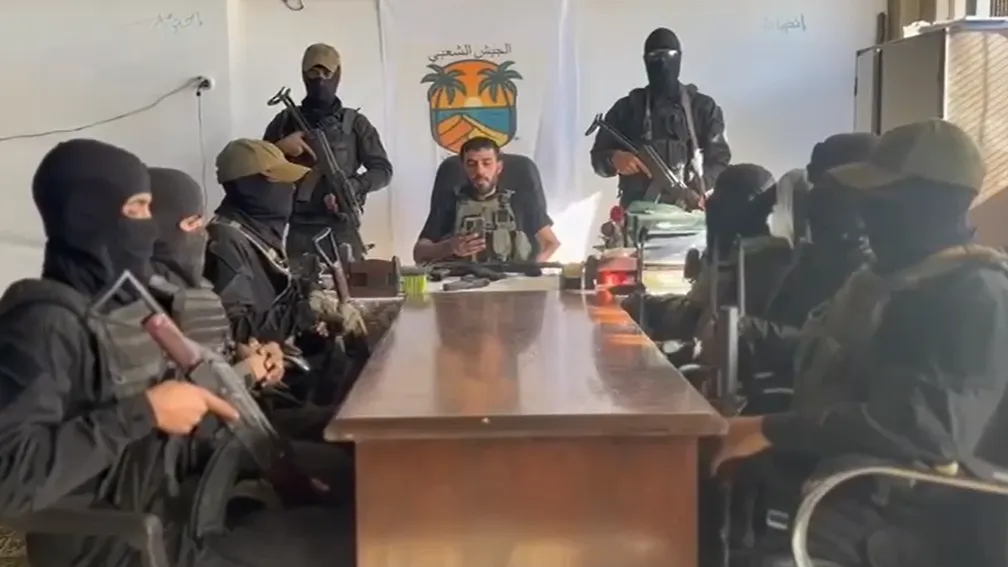
Gaza (QNN) - Israel's experiment in building local collaborator militias inside Gaza is collapsing. On Friday morning, dozens of members of the armed groups led by the Israeli-backed figure Ashraf al-Mansi, among them men, women, and children, crossed back over the Yellow Line into northern Gaza and surrendered themselves and their families to Palestinian security forces in Beit Lahia, according to a source who spoke to Quds News Network.
The source said the returnees had made secret and organized contact with the security agencies ahead of the surrender, in order to regularize their status under established legal procedures. They were secured and transferred to Gaza, where the legal processing of their cases is under way. The source added that the authorities had dealt with families fleeing a militia camp in the so-called yellow zone in northern Gaza, and that initial testimonies from the returnees spoke of assaults and moral and criminal crimes committed inside the camp. The authorities called on families still trapped in the camp to leave immediately and return to Gaza.
The collapse comes as Hamas has secured one of its central demands in the 15-point framework for the second phase of the ceasefire: that the Israeli-backed militias be disarmed and their members permanently barred from joining the security forces of any future technocratic government in Gaza. Even Israeli analysts now acknowledge that the militia project, established and cultivated by Israel as a counterweight to Hamas, is heading toward the same fate as other failed wartime schemes, increasingly detached from the reality of Palestinian society.
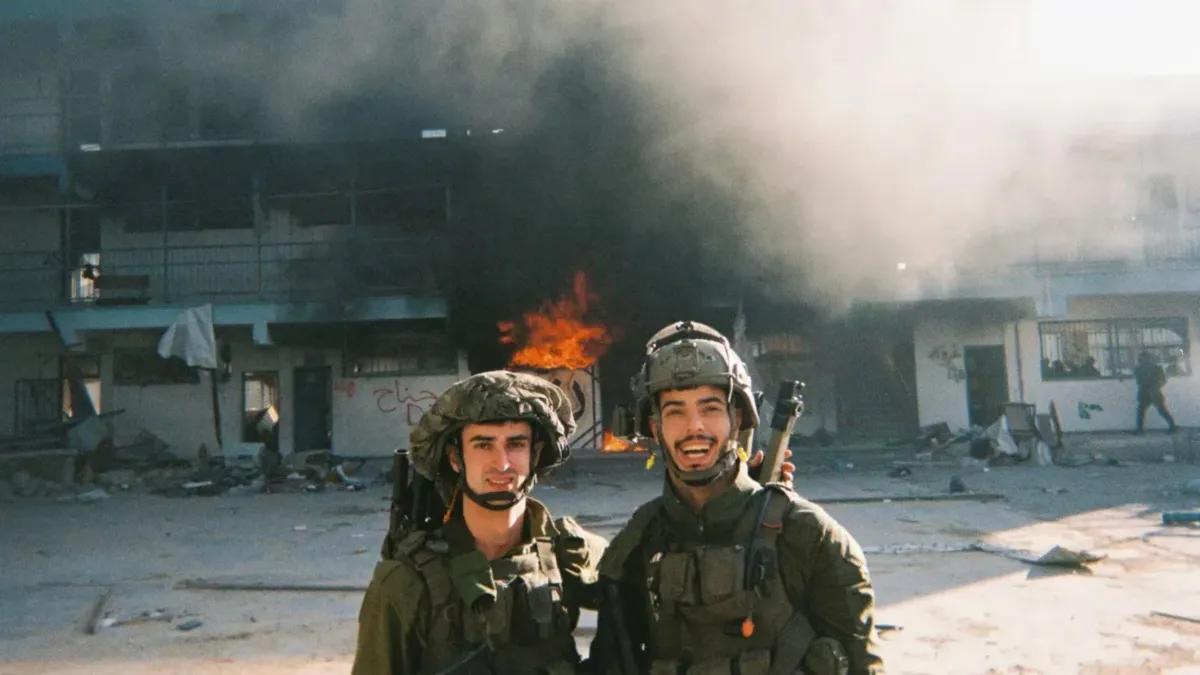
Israel had built a network of some five main armed groups, together numbering at most a few thousand members, operating in areas under the control of the occupation army. The largest, the so-called Popular Forces around Rafah, was founded by Yasser Abu Shabab, who was killed in an internal assassination and replaced by Ghassan Dahini. Other groups were led by figures including Hussam al-Astal in Khan Younis, Ashraf al-Mansi in the north, Rami Halas in eastern Gaza City, and Shawqi Abu Nseira in central Gaza. Israel transferred weapons, money, and even large drones to the groups, presenting them to the world as a local alternative to Hamas.
In reality, the militias functioned as criminal militias. Their members were implicated in looting humanitarian aid, smuggling, and the harassment and robbery of Palestinians passing through the Rafah crossing, and some had ties to elements affiliated with the Islamic State. Testimonies from those now surrendering describe assaults and crimes committed within the militia camps themselves. Above all, the groups had almost no public legitimacy, with Gaza's major clans distancing themselves from them and continuing to stand with the resistance.
Among Palestinians, the militias are widely compared to the South Lebanon Army, the collaborator force Israel armed against Lebanon before abandoning its members upon its withdrawal, a comparison that carries a damning meaning: collaboration with the enemy, association with crime and violence, and eventual abandonment. Hamas has waged an active campaign against the groups and their commanders, while clan leaders and community figures work to persuade rank-and-file members to defect and return, guaranteeing their safety, exactly the process now unfolding in Beit Lahia.
Sources: Quds News Network; Ynetnews; Radaa force statement