
Israel has refused to renew a water supply agreement with Jordan that expired in late 2025, conditioning the restoration of additional water supplies on Jordan softening its criticism of Israel over Gaza and restoring full diplomatic ties. The move has confirmed what Jordanian anti-normalization movements have warned for over a decade: that energy and water deals with Israel would eventually become instruments of political leverage against Jordan.
The 1994 Wadi Araba peace treaty between Israel and Jordan mandates Israel supply 50 million cubic meters of water annually to Jordan, one of the world's most water-scarce countries. In 2021, Israel agreed to double this to 100 million cubic meters per year as part of a broader UAE-brokered water-for-energy framework. That additional 50 million cubic meters agreement has now expired, with Israel refusing to renew it absent political concessions from Amman.
Israeli officials reportedly conditioned the supply of the additional volume on Jordan moderating its rhetoric toward Israel and restoring full diplomatic ties. Jordan's King Abdullah declined repeated requests from Netanyahu to meet in March, with renewal of the water agreement listed as one of Abdullah's conditions for agreeing to a meeting.
An unnamed Israeli official framed Israel's position bluntly: "Jordan needs the water, but when you help your neighbors, you expect warmer relations. If there is a meeting, everything will be on the table: normalization, water, and strengthening bilateral ties."
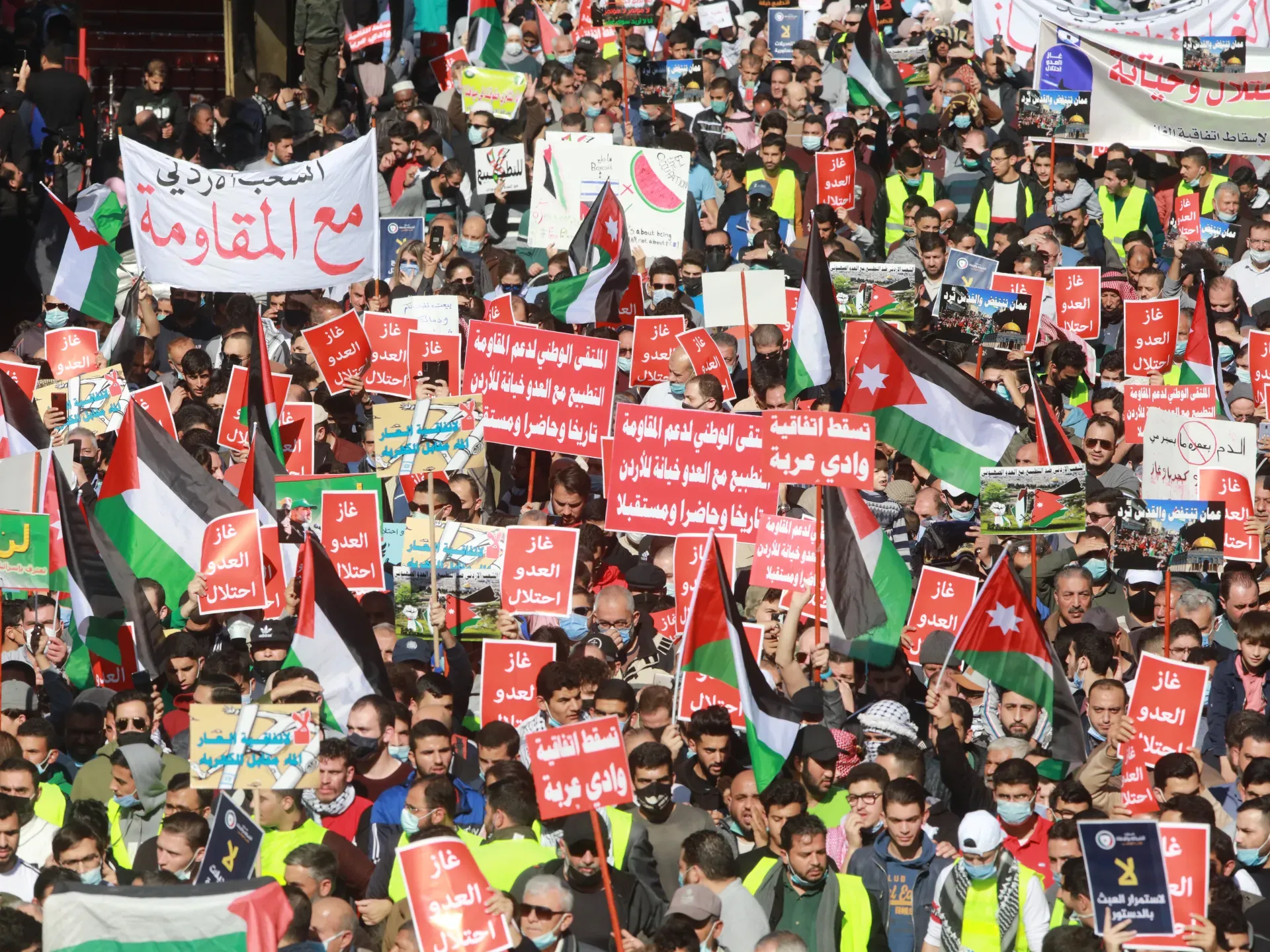
This is precisely what Jordanians feared. Jordanian anti-normalization movements have, for decades, warned their government that Israel would use gas and water deals as blackmail against Jordan. When Jordan signed an intent letter to buy gas from Israel in 2014, followed by an official agreement in 2016, the deal triggered widespread protests from the moment news leaked. Opposition, which has flared regularly since, has been both symbolic and sustained in the streets. Protesters adopted the slogan "the enemy's gas is occupation," noting that the gas comes from offshore Palestinian waters in the Mediterranean. Israel halted gas exports to Jordan at least twice: once during its 2021 assault on Gaza, and again in June 2025 during the US-Israeli attack on Iran, when it shut down the Leviathan and Karish gas fields, declaring force majeure.
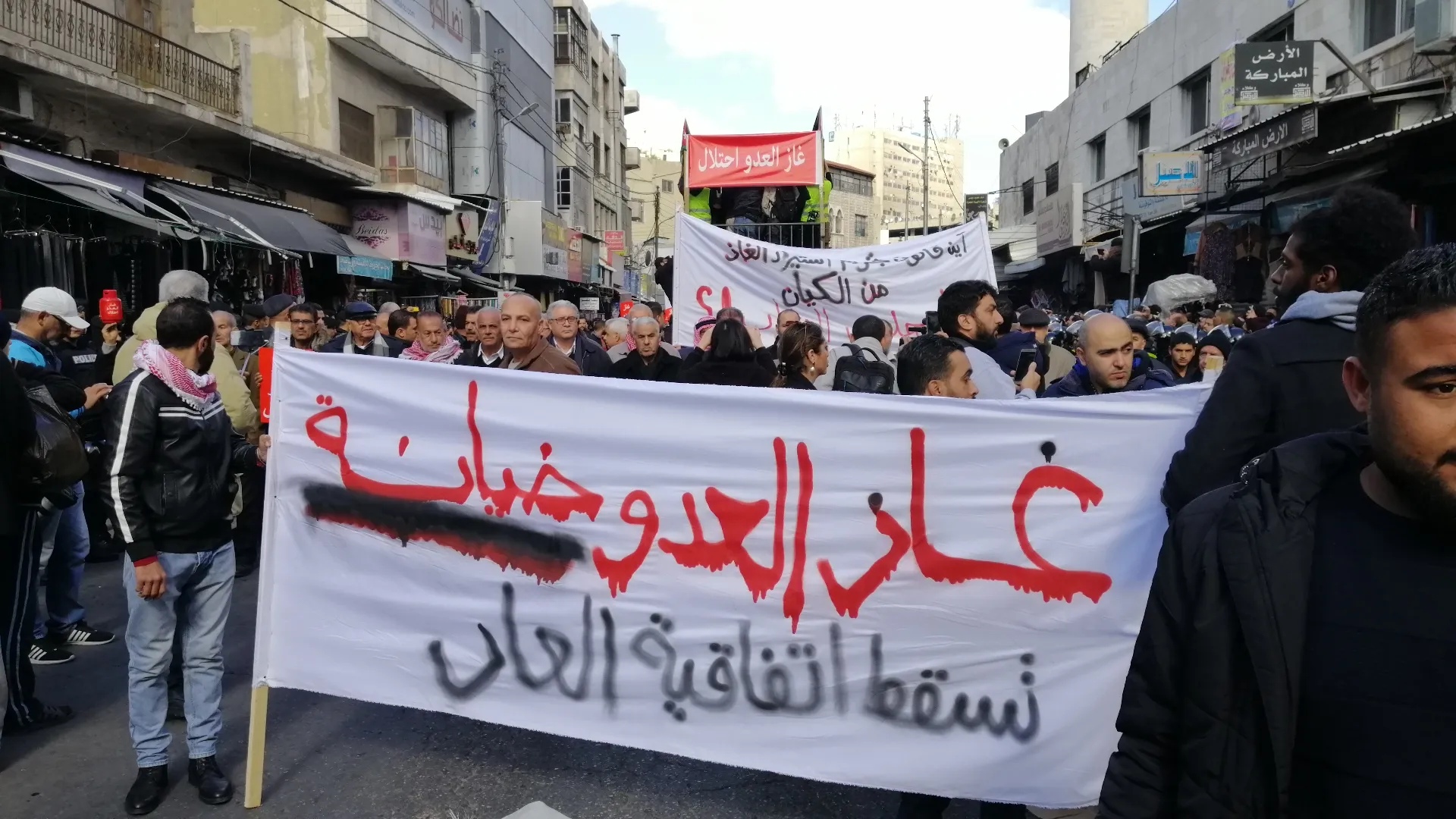
In 2021, thousands of Jordanians protested the UAE-brokered water-for-energy agreement, chanting "No to the agreement of shame" and carrying signs reading "Normalization is treason." Protesters included opposition parties, tribal groups, and trade unions. University students were arrested for protesting the deal. Many Jordanians characterized the arrangement as deepening dependency on an occupying power that could not be trusted to honor its commitments, particularly while it continued to occupy Palestinian land and wage war on Gaza.
Those warnings have proven accurate. Israeli officials also linked renewal of the water agreement to political conditions, including moderating public rhetoric and restoring full diplomatic engagement, while Jordan was reluctant to be seen as trading its stance on Gaza and the West Bank for water. As talks dragged on without agreement, the extra 50 million cubic meter arrangement expired; since late 2025, supplies have reverted to the 50 MCM per year provided under the peace treaty alone.
Israel and Jordan have not maintained ambassadors in each other's countries since 2023, when Israel began its genocide in Gaza. Jordan's Foreign Minister Ayman Safadi has been among the most vocal Arab government critics of Israel's conduct in Gaza, repeatedly calling for accountability and condemning the scale of Palestinian deaths. Israeli officials cited Safadi's public statements specifically as a reason for refusing to renew the water agreement.
The UAE has proposed a trilateral summit in Abu Dhabi involving Israeli, Jordanian, and Emirati energy ministers to address the dispute, alongside discussions about the broader Prosperity initiative, a proposed desalination plant that would eventually supply Jordan with 200 million cubic meters annually in exchange for Jordanian solar electricity. Israel has expressed interest in such a summit. Jordan's position on any such meeting has not been confirmed.
Jordan has begun expanding domestic water alternatives including the National Water Carrier, a major desalination project on the Red Sea designed to supply Amman independently of Israeli water. Once operational, it will not remove the need for transboundary water, but it will reduce the political leverage that any single neighbor can exercise over Jordan's taps.
Sources: Times of Israel; Fanack Water; Peoples Dispatch; Al Jazeera; MERIP; Brookings; July 2026.