

Across the globe, the summer holiday signifies a period of rest, travel, and self-reward for students and teachers after a demanding academic year. However, in Palestine, summer has transformed into the longest season of "austerity management" and extreme necessity. While schoolyards fall silent, devoid of student clamour, signalling the start of the break, the real noise shifts to living rooms, grocery bills, and small shops. Here, no one discusses summer camps or recreational trips; instead, families are preoccupied with a "survival economy", meticulously planning how to stretch half-salaries across the long summer months amidst an unprecedented economic deterioration in the country.
This seasonal paradox profoundly reflects harsh official figures. Since late 2025 and early 2026, the Palestinian government has faced a severe financial crisis with a fiscal deficit exceeding 20 billion shekels. This has rendered it unable to meet its obligations, paying only meagre salaries ranging between 55% and 60%. Data from the Palestinian Central Bureau of Statistics show that the unemployment rate rose to 29.5% in the first quarter of 2026 across the West Bank and Gaza Strip combined, with a stark disparity of 78% in Gaza. This bitter reality casts a heavy shadow over all vital sectors, particularly education. While Palestinians live under this "daily forced engineering", the structural deficit in the livelihoods of the most influential groups in society, teachers, becomes evident. The average teacher's salary is approximately 3200 shekels before deductions, while the overall average monthly salary in the country drops to about 1900 shekels according to 2026 classifications. These meagre incomes are completely wiped out by sharp inflation and the high cost of living, rendering the legally mandated minimum wage of 1880 shekels a symbolic figure, utterly insufficient to cover basic necessities, forcing families to spend their summer vacation devising harsh alternatives to endure.
The summer holiday has become a frantic search for alternative income sources for teachers, an economic necessity imposed by circumstances. Teacher Khawla from Nablus, a mother and head of a household, described the intermittent salaries as "daily pressure and a headache". This situation compelled her to meticulously prioritise, postpone expenses, borrow from relatives, and even work extra hours in her home-based beauty salon. For her:
Summer work is no longer an additional option; it has become a necessity. The salon is my only lifeline, providing essential income, not supplementary, for me and my family, especially during the summer wedding season. My continuation in teaching is merely a message and a personal responsibility, more than a source of livelihood.
Mr A.Sh. from Al-Arroub refugee camp shared the same sentiment, emphasising that delayed and deducted salaries made him unable to cover daily transportation costs to school or purchase essential household items. This pressure drove him to work in agriculture in nearby settlements during the summer and in a carpentry workshop in Bethlehem during the academic year after school hours. He also described his primary job as "illusory job stability" that guarantees a future pension, while side jobs were "a necessity, not a luxury" that bridge the financial gap. He added:
I am 36 years old and still haven't been able to save for building a house or getting married. If I had the opportunity, I would work in the settlements all year round, not just during the summer holiday, but Israeli security procedures prevent me from even considering this.
In the same vein, Mr. Majed Amr from Hebron offered an even harsher testimony, noting that salaries did not cover the high cost of living even when they were paid in full. Today, transportation costs alone constitute an enormous burden, potentially reaching 25-30 shekels daily for teachers commuting from distant areas. This situation prompted him and his wife to launch a small sushi-selling project to compensate for the shortfall.
Undoubtedly, the macroeconomic crisis not only affects teachers but also permeates to children and students (both male and female), who now directly perceive the scent of poverty and the deterioration of economic conditions. This early awareness of economic reality has pushed them towards informal labour markets at an early age, and the summer holiday has become the most apparent "solution space". Although these solutions may seem seasonal, field testimonies confirm that many of these side jobs continue beyond the summer holiday, becoming an integral part of daily survival strategies. This has led to a decline in discipline and academic achievement and an increase in failure rates, as Mr. Majed Amr indicated, threatening their educational and developmental future.
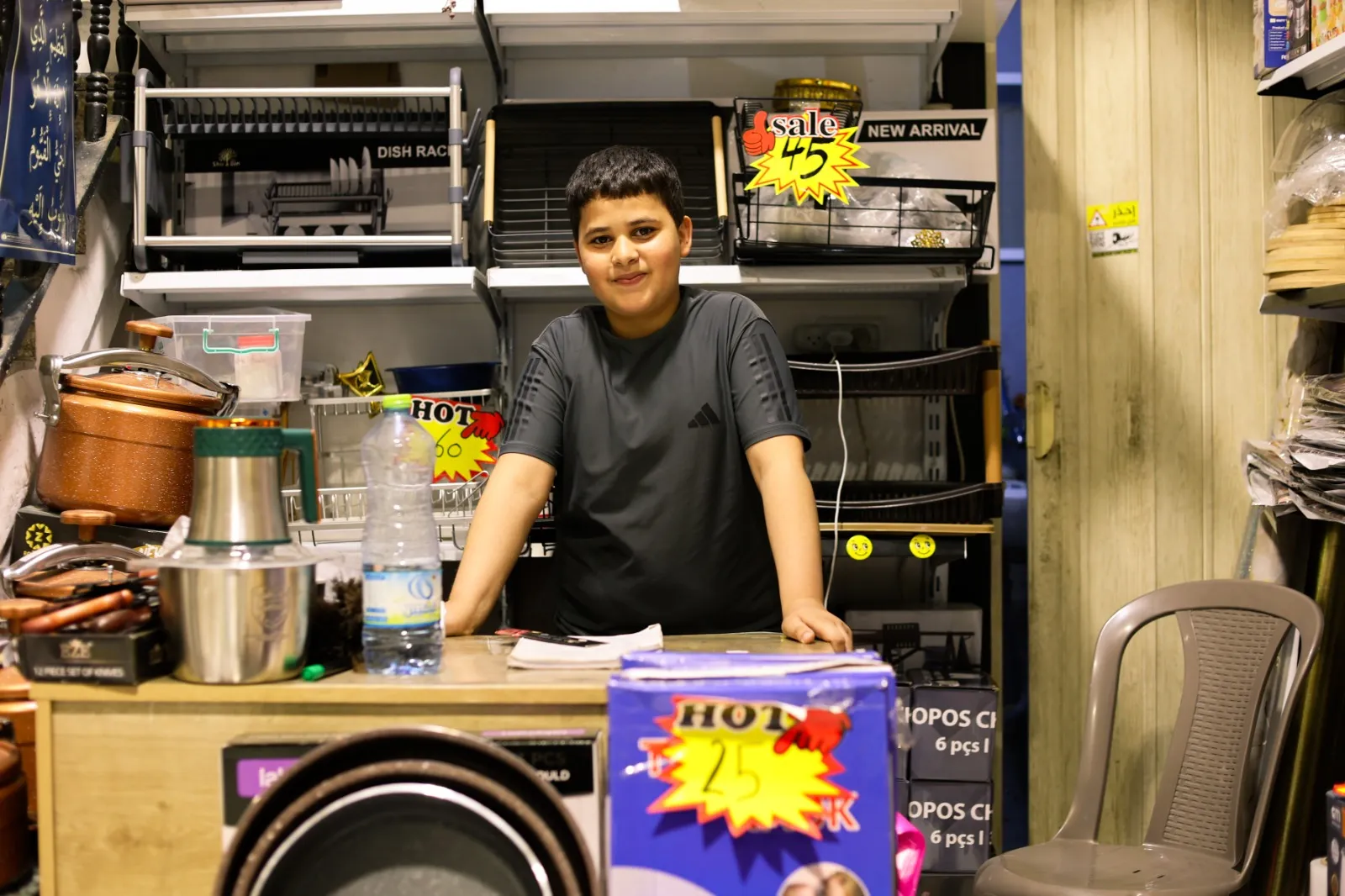
Mohammad, 13, works at his family's shop in Ramallah.
The motivations for child labour in Palestine have undergone a radical transformation. Previously (2010-2015), child labour was often associated with "lack of awareness" about the importance of education or "helping in family projects", with 51% of working children assisting their families in home-based projects. More recently (2023-2026), the motivations have shifted to "pure economic need", exceeding 71%, where the child has become the "supporting breadwinner" to compensate for the loss of the head of household's job, especially after the cessation of labour in Israel and the cutting of funding for NGO projects after the recent war. This shift reflects a severe deterioration in living conditions, where child labour is no longer limited to males or the "poorest" segments but has entered the "middle class" (children of teachers and employees) seasonal labour market to cover the salary gap. Girls have also entered this market during the summer holiday, working in summer camps, in manual home-based labour, and in e-commerce projects, representing a significant demographic shift in the informal economy.
Mustafa (14 years old) recounted his story this summer holiday, working in a restaurant all day to help his family after his father lost his job in Israel. For Mustafa:
Work is more important to me than school because it brings me money, but school brings me nothing. I wish I could drop out, but my mother insists I continue my education and often speaks to the school principal about me. When I used to miss school, the principal would come after school hours to the stall where I worked to reprimand me.
Mustafa admitted he has been subjected to many exploitation attempts, working long hours for low wages, and feels his dignity is violated in some jobs, especially when he had to sell tissues or biscuits to passers-by, which highlights the fine line between child labour and begging. Mustafa added:
I have been working since I was 10 years old. I have tried many jobs, at stalls and in workshops. Working in the restaurant is the easiest in summer because of the air conditioning.
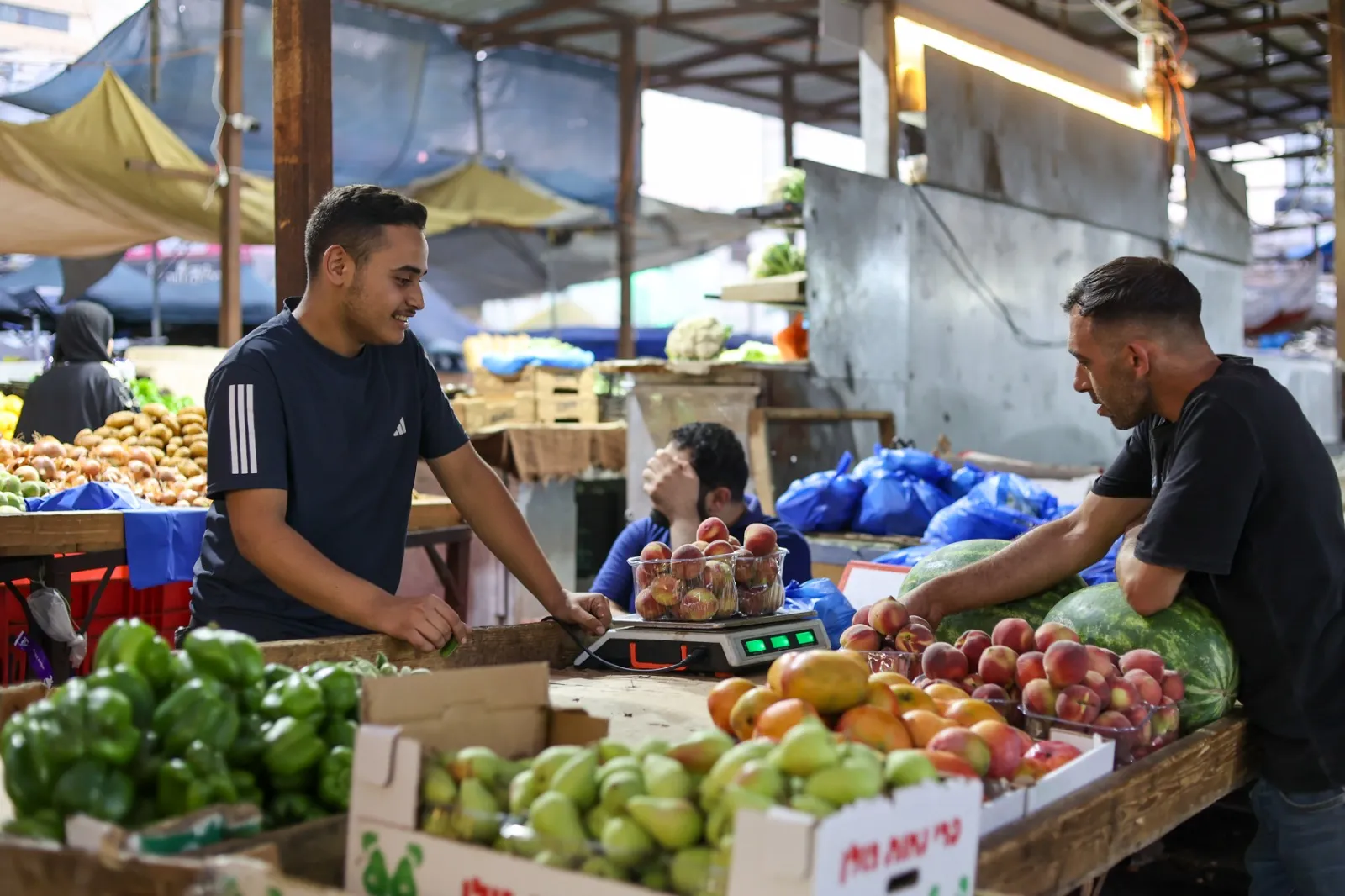
Lawyer and human rights activist Ismail Al-Rajabi pointed out that Palestinian law draws a "clear line" between seasonal student work and child labour. He added:
Palestinian law establishes a basic rule: a child under 15 is prohibited from working in any form; their work is considered exploitation. However, a student between 15 and 18 years old can work seasonally or part-time, provided the work is officially documented to ensure their rights; is not dangerous; does not harm their health; or deprive them of education. The fundamental difference is age, the nature of the work, and the student's continuation in school.
Despite official efforts, reality reveals significant gaps. The Palestinian Ministry of Labour issued several strong statements in 2026, emphasising that combating child labour is a "national priority". The ministry launched the "My Childhood, My Right" campaign in June 2026, which included inspection tours and awareness workshops. It also affirmed Palestine's commitment to International Labour Organisation conventions (138 and 182) and issued Ministerial Decision No. 50 of 2026, prohibiting the employment of children under 15 and specifying hazardous occupations. Nevertheless, the ministry's own official statistical data show that the percentage of working children (10-17 years old) reached about 4% of the total children in the Palestinian territories, with higher percentages in the West Bank, most of whom work in agriculture, trade, and services, often in unregulated conditions. These figures, in addition to Mustafa's testimony, confirm a significant gap between legislation and reality, where employers exploit the needs of children and families in the informal economy.
Students entering the workforce at an early age increase school dropout rates and create a generation that sees quick financial income as an alternative to a university degree. This shift leads families to sacrifice education for immediate income, depriving society of minds and competencies and transforming temporary emergency solutions into a permanent economic loss that is difficult to compensate for.
In conclusion, I believe we are living in a state of uncalculated gambling with the future of Palestinian human capital. Betting on the resilience of teachers and their continuation in their mission without a radical solution to the liquidity crisis and rampant inflation is a losing gamble. Therefore, I believe it is time to reconsider the "Law Prohibiting Dual Employment" for public sector employees. Instead of leaving teachers to face exploitation in their forced side jobs (whether during the peak of the summer holiday or throughout the academic year), they should be granted legal protection that safeguards their rights and financial dignity.